
Almond nails do something most shapes can’t: the tapered tip elongates the finger while the wider base keeps enough surface for color to actually show up. On deeper skin, that surface area matters more than people realize, because certain finishes and shades read completely differently against rich brown, deep umber, or olive undertones than they do on paler skin. This isn’t about finding “the best” almond nails in general, it’s about finding the ones that make your specific undertone look intentional, not accidental.
1. Deep Chocolate with a Glass-Glaze Finish

A high-gloss, almost wet-look brown polish over an almond shape reads as rich instead of flat, because the shine bounces light the same way your skin does. On warm and neutral deep tones, chocolate brown stops being “safe” and starts looking expensive. It blends into the skin at the cuticle and separates at the tip, which is exactly the contrast almond shape is built to show off. Ask for a “glass gel” or high-build gel topcoat rather than regular polish topcoat; it holds the mirror shine longer and doesn’t dull after a few days of hand-washing. If you’re drawn to this family of shades, our brown nail ideas roundup has more variations worth screenshotting.
2. Burnt Orange Chrome

Chrome powder in a burnt orange or copper tone catches light in a way flat polish can’t, and on deep warm skin it genuinely looks like it’s glowing from underneath rather than sitting on top. This works best on hands with warm or olive undertones. On cool undertones it can look slightly muddy under indoor lighting. One honest trade-off: chrome finishes show smudging and fingerprint marks faster than regular polish, especially in darker chrome shades, so avoid touching anything for the first hour after application.
3. Black Almond with Negative Space Cuticle Line

A solid black almond nail with a thin unpainted strip left at the cuticle creates a two-tone effect that photographs beautifully on deep skin. The negative space lets your actual skin tone act as the second “color,” so it never clashes. This is one of the most versatile options on this list because it works across warm, cool, and neutral undertones equally well. The main mistake people make here is over-filing the sides to get a sharper almond point, which thins the nail edge and makes it prone to breaking. Ask your tech to taper gradually rather than filing aggressively at the tip. For more directions on this look, the black nail ideas page has several negative-space variations.
4. Warm Terracotta Matte

Matte terracotta sits in that in-between zone of orange and brown, and it flatters warm and olive undertones in a way that few “nude” polishes manage, because it’s pigmented enough to read as color rather than disappearing into the skin. These finishes also do something specific for deeper skin tones: they diffuse light instead of reflecting it, which tends to look more sophisticated than glossy in professional or studio-lit photos. Note that matte polish shows dryness and cuticle buildup more than gloss does, so this is a look where a quick cuticle oil pass before application actually changes the outcome.
5. Gold Foil French Tip on Almond
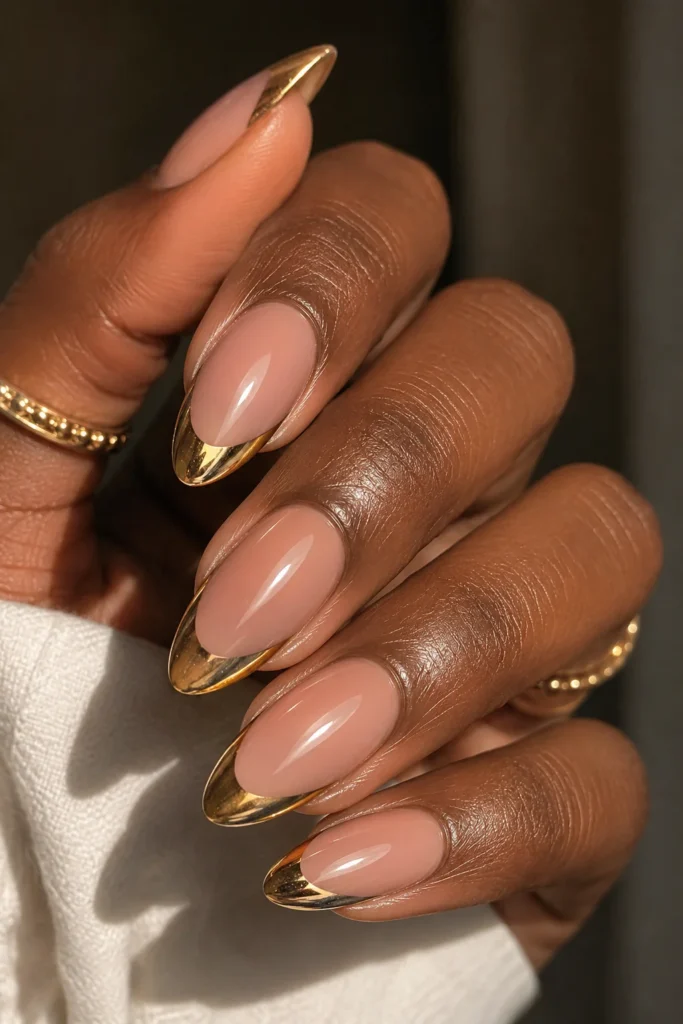
Instead of a traditional white French tip, a gold foil or gold chrome tip against a bare or sheer nude base creates contrast that a white tip just can’t on deep skin. White often looks chalky or stark against rich brown tones, while gold reads as jewelry. This suits every undertone, but warm and olive skin tones especially, since gold pulls warmth forward instead of fighting it. If you love this metallic-on-almond combination, our gold nail ideas collection has more foil and chrome placement options to bring as reference.
6. Espresso Brown with a Soft Square-Almond Hybrid

For anyone whose natural nail bed is on the narrower side, a slightly softened almond (less pointed, more rounded at the taper) keeps the shape from looking pinched. Espresso brown in a satin (not full matte, not full gloss) finish works well here because it doesn’t over-emphasize width the way high-shine dark polish can. This is genuinely one of those “ask a nail tech” situations: describe it as “almond with a flatter apex” so they don’t file it into a sharp point that doesn’t suit your bed shape.
7. Deep Burgundy with Subtle Shimmer

Burgundy is one of the most reliable colors across deep skin tones because it sits close enough to the skin’s own undertone family that it never looks jarring, while still being pigmented enough to stand out. A fine shimmer (not chunky glitter) mixed into the burgundy catches light without looking costume-y, and it photographs particularly well in warm indoor lighting, though it can look slightly darker and flatter under cool studio lights, worth knowing if you’re getting photos taken for an event. There’s a full range of shades and finishes in this family over in our burgundy nail ideas guide.
8. Caramel Ombré Fade

A gradient from a warm caramel base into a lighter, almost champagne tip works especially well on medium-to-deep warm undertones because the fade mimics the natural way light hits the nail bed anyway, it looks less like an effect and more like enhanced lighting. Cool undertones can wear this too, but doing the ombré with a slightly pinker caramel keeps it from leaning too orange. This is a technique worth paying a professional for rather than DIYing your first attempt: an uneven gradient is one of the more obvious at-home nail mistakes, and it’s very visible on an elongated almond shape where there’s more surface to show blending lines.
9. Olive Green Cream Finish
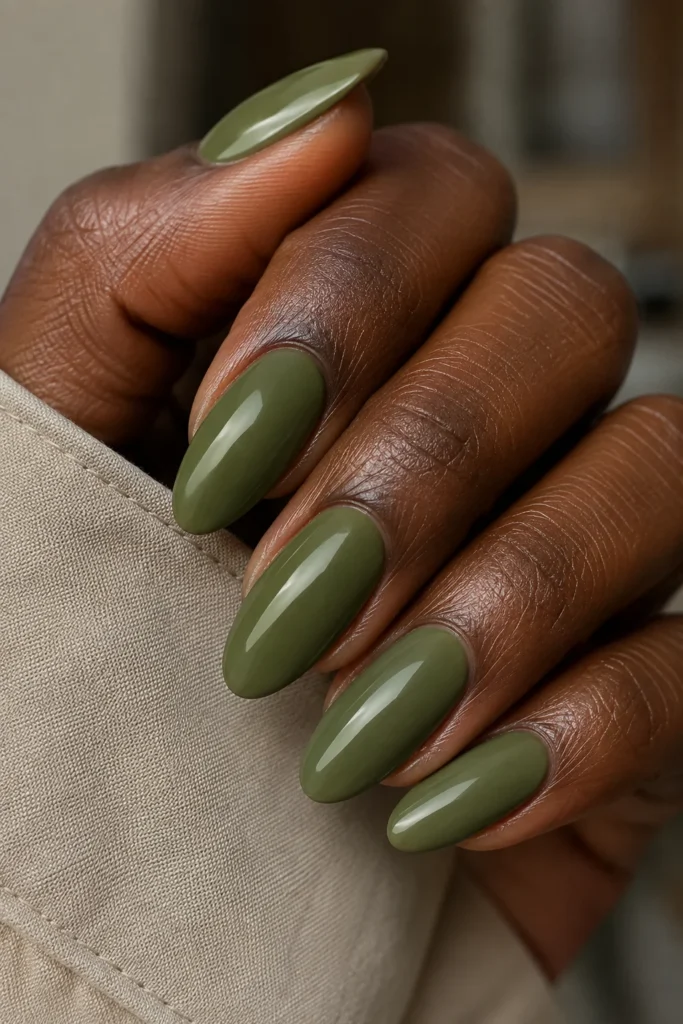
Cream (non-shimmer, non-metallic) olive green is underrated on deep skin, particularly on neutral and olive undertones, because it doesn’t compete with warmth or coolness, it sits in its own lane. On very cool undertones it can look slightly gray, so if that’s you, look for a version with a touch more yellow in the base. Cream finishes also age better day-to-day than shimmer, since there’s no glitter to dull or chrome to scuff.
10. Deep Plum with Glossy Chrome Tip

Combining a matte or satin plum base with just the tips in glossy chrome creates dimension without going full metallic across the whole nail, which can be a lot on an already-long almond shape. This flatters cool and neutral deep undertones especially well, since plum sits in the cool-red family. One thing worth knowing from experience: plum and other deep jewel tones can look almost black in low light and only reveal their true color in direct or natural light, so don’t judge the shade purely from salon photos taken under warm bulbs.
11. Warm Nude with Gold Micro-Flakes

A nude that’s actually calibrated to warm deep skin (not a beige that was designed for lighter tones and just looks ashy here) paired with fine gold micro-flake glitter gives a “your nails, but nicer” effect rather than a loud statement look. This is the one to request when you want something office-appropriate that still has dimension. The practical tip: bring a swatch or photo of the exact nude when you book, because “nude” varies enormously by brand and undertone, and a tech matching from memory alone can easily land on something too pink or too yellow for your skin.
12. Coffee-and-Cream Two-Tone Almond

Two opposing almond nails, one in a deep coffee brown, one in a soft cream, worn in an alternating pattern across the hand creates striking contrast that works on nearly any undertone because you’re not relying on one shade to do all the flattering work. It’s a good option if you want something more editorial without going into full nail art territory. If the elongating effect of almond isn’t quite your preference, the same two-tone idea translates well to a coffin shape too, worth comparing both in our coffin nail ideas roundup before you decide which silhouette you actually want to commit to.
Finding Your Undertone Before You Book
Warm undertones (gold, peachy, or yellow-based) tend to glow under terracotta, gold, caramel, and warm browns. Cool undertones (pink, red, or blue-based) usually look best in plum, burgundy, cool chocolate, and jewel tones. If you’re neutral or genuinely unsure, cream and satin finishes in mid-depth shades (think olive, espresso, or muted burgundy) are the safest starting point because they don’t lean hard in either direction.
The most useful thing you can do before an appointment is bring two or three reference photos taken in different lighting (one indoor, one natural daylight if possible) so your tech can see how the color actually behaves rather than trusting a single, possibly filtered, photo. And if you’re new to almond shape, keep in mind it needs a bit more length than round or square to look proportionate, so very short natural nails may look better with a gentler taper until they’ve grown out.


