
Thick, yellow, crumbly nails are hard to ignore. If you want to know how to get rid of nail fungus, you are not alone. The problem is common, and it can affect both fingernails and toenails. It can be treated, but it takes patience.
You will learn the signs, the real treatment options, and how long healing takes. You will also learn simple habits that keep the fungus from returning.
Table of Contents
- What Is Nail Fungus?
- Fingernail Fungus vs. Toenail Fungus
- When to See a Doctor
- How to Get Rid of Nail Fungus at Home
- Medical Treatments That Work Best
- How Long Does Healing Take?
- How to Stop Nail Fungus From Coming Back
- Mistakes to Avoid
- Conclusion
What Is Nail Fungus?
Nail fungus is an infection in or under a nail. Doctors call it onychomycosis. Tiny fungi grow in the nail and slowly change how it looks.
The most common cause is a group of fungi called dermatophytes. They also cause athlete’s foot. Yeast and molds can cause nail infections too.
Fungi like warm, damp places. They enter through small cracks in the nail or the skin around it. Sweaty socks, wet gloves, and damp shoes give them the right home.
Common Signs
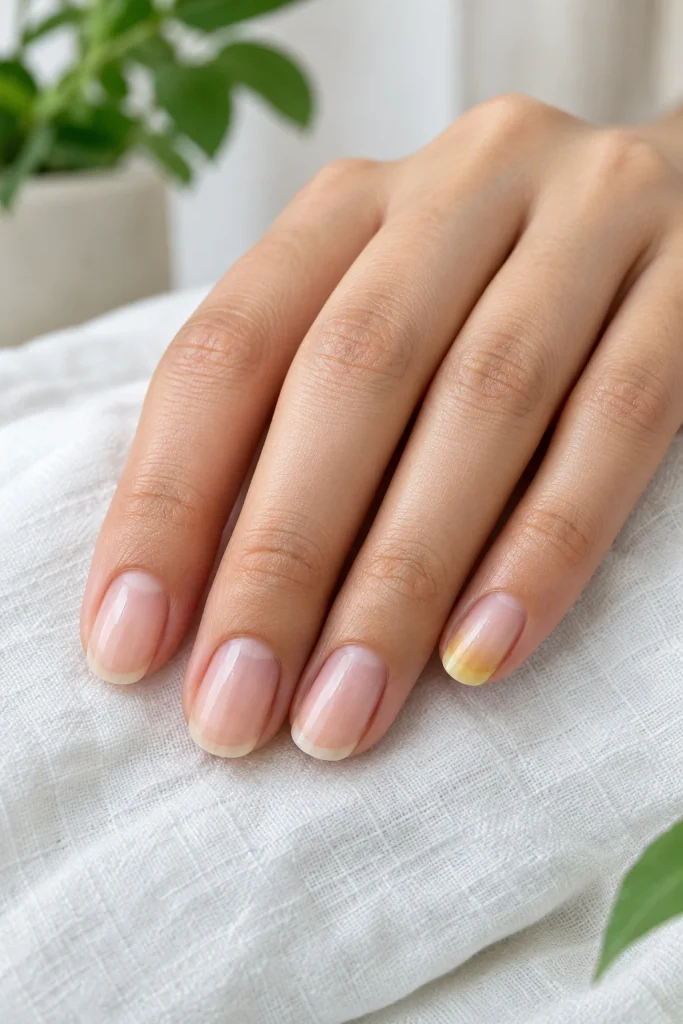
Early on, you may see a white or yellow spot near the tip of the nail. Later, the nail may change in other ways:
- It turns yellow, brown, or white.
- It becomes thick and hard to cut.
- The edges crumble or break.
- It lifts away from the skin below.
- It gives off a mild odor.
Who Has a Higher Risk
Anyone can get nail fungus. Some people face a higher risk. Older adults get it more often because nails grow slower with age. People with diabetes, a weak immune system, or poor blood flow are also at risk.
Daily habits matter too. Wet hands for long hours, tight shoes, and shared gym floors all raise the risk. So do artificial nails.
Fingernail Fungus vs. Toenail Fungus

Both types look alike. They differ in how often they appear and how fast they heal.
Toenail fungus is far more common. Studies suggest fingernail infections occur about seven times less often. Toenails stay inside shoes, and shoes stay warm and damp.
Fingernail infections also have a different pattern. Yeast causes more of them, especially when hands stay wet often. Red, swollen, or sore skin around a fingernail can be a sign of yeast.
| Feature | Fingernails | Toenails |
| How common | Less common | More common |
| Growth speed | About 3 mm a month | About 1.5 mm a month |
| Time to grow out | About 4 to 6 months | About 12 to 18 months |
| Oral medicine length | About 6 weeks | About 12 weeks |
| Common triggers | Wet hands, artificial nails, nail biting | Sweaty shoes, damp floors |
Some people have both. A foot infection can spread to the hands when someone touches or scratches the infected area. Wash your hands after you touch an infected nail.
When to See a Doctor
Many people try home care first. Some cases need a doctor right away. Waiting can make treatment harder.
See a doctor if the nail is painful, swollen, or leaking fluid. Go if the skin around the nail is red. Go if the infection spreads to more nails. People with diabetes or poor circulation should get checked at the first sign of a nail change.
A doctor can also confirm the cause. Only about half of nail changes come from fungus. Psoriasis, injuries, and other skin problems can look the same. A simple lab test on a nail clipping gives a clear answer. Treating the wrong problem wastes months.
How to Get Rid of Nail Fungus at Home
Home care suits very mild cases. Think of a small spot at the tip of one or two nails. It can also support medical treatment.
Be realistic about results. Nails are thick, and medicine struggles to reach the fungus below. Store-bought creams made for skin often do not work on nails.
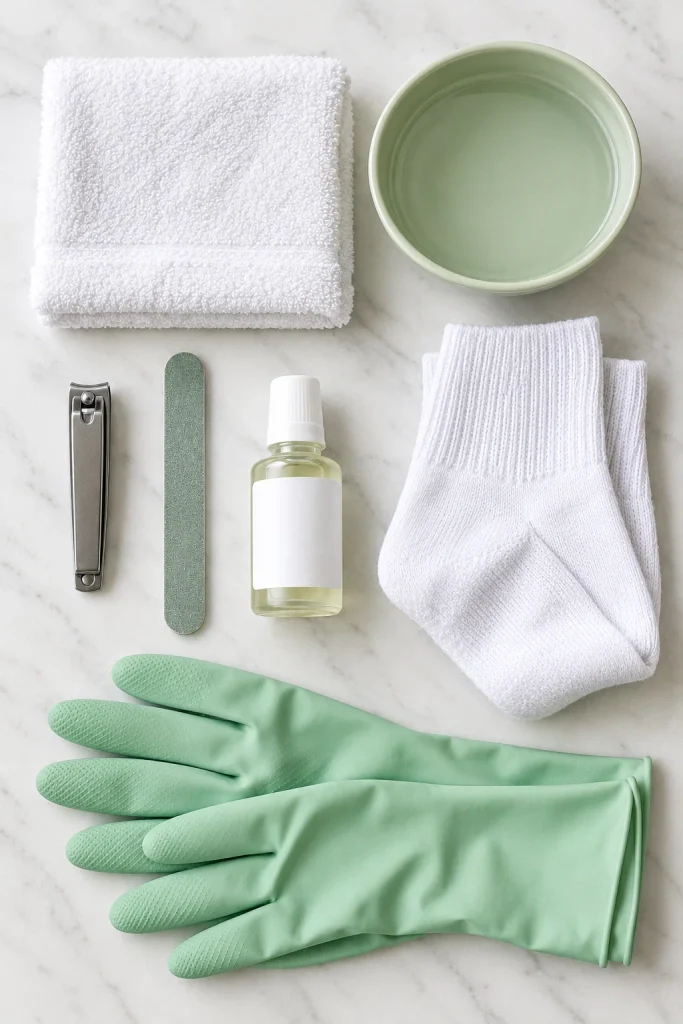
What You’ll Need
- A nail clipper and file used only on infected nails.
- Mild soap and warm water.
- A clean, dry towel.
- An antifungal nail product from a pharmacy.
- Clean cotton socks for feet.
- Waterproof gloves for wet hands.
Simple Daily Routine
- Wash the area. Use soap and warm water.
- Dry well. Pat the nails dry. For toes, dry between each one.
- Trim the nail. Keep it short. Cut toenails straight across.
- File thick areas. Go gently. Clean the file after each use.
- Apply the product. Follow the label and cover the whole nail.
- Protect the nail. Wear clean socks or gloves when needed.
Do the routine every day. Skipped days are a common reason treatment fails.
Pro Tip: Take a photo of the nail every two weeks. Nails change slowly, so photos show progress you might miss. Look for a clear band of healthy nail growing from the base.
What About Natural Remedies?
Tea tree oil, vinegar soaks, and vapor rub are popular. None has strong proof of curing nail fungus. Some can also irritate the skin.
If you try one, treat it as a small extra. Do not use it in place of proven treatment.
Medical Treatments That Work Best
Stronger infections need stronger help. A doctor will pick a treatment based on the fungus, the nail, and your health.
Antifungal Pills
Pills usually work best. Terbinafine is a common choice. Itraconazole is another. Research shows oral medicine cures nail fungus faster and more often than medicine applied to the nail.
The medicine travels through the blood to the nail. Fingernails often need about 6 weeks of treatment. Toenails often need about 12 weeks.
Pills can affect the liver and mix badly with other medicines. Doctors may order blood tests. Never take them without medical advice.
Prescription Nail Paints
Doctors can prescribe medicated nail solutions. Examples include efinaconazole, ciclopirox, and tavaborole. You apply them daily for many months. They cause fewer side effects than pills. They also work less often, so they suit mild cases or people who cannot take pills.
Laser and Nail Removal
Some clinics offer laser treatment. Research is limited and results are mixed. Costs can be high.
In severe or painful cases, a doctor may remove part or all of the nail. This lets medicine reach the infected skin. A new nail usually grows in later.
Treatment Options at a Glance
| Option | Best For | Main Downside |
| Store-bought nail products | Very mild cases | Often weak results |
| Prescription nail paint | Mild to moderate cases | Months of daily use |
| Antifungal pills | Moderate to severe cases | Possible liver and drug effects |
| Laser | Cases where other options fail | Cost and limited proof |
| Nail removal | Painful or severe nails | Invasive |
How Long Does Healing Take?
Healing is slow. Medicine may stop the fungus within weeks. The damaged nail stays until a healthy one grows in and replaces it.
Fingernails usually take about four to six months to grow out. Toenails take about twelve to eighteen months. Many people stop too early because the nail still looks bad. Keep going until the healthy nail has replaced the old one. Ask your doctor when it is safe to stop.
The fungus can also come back after a cure. Studies report that anywhere from 10 percent to 53 percent of patients see a return. So prevention matters as much as treatment.
How to Stop Nail Fungus From Coming Back
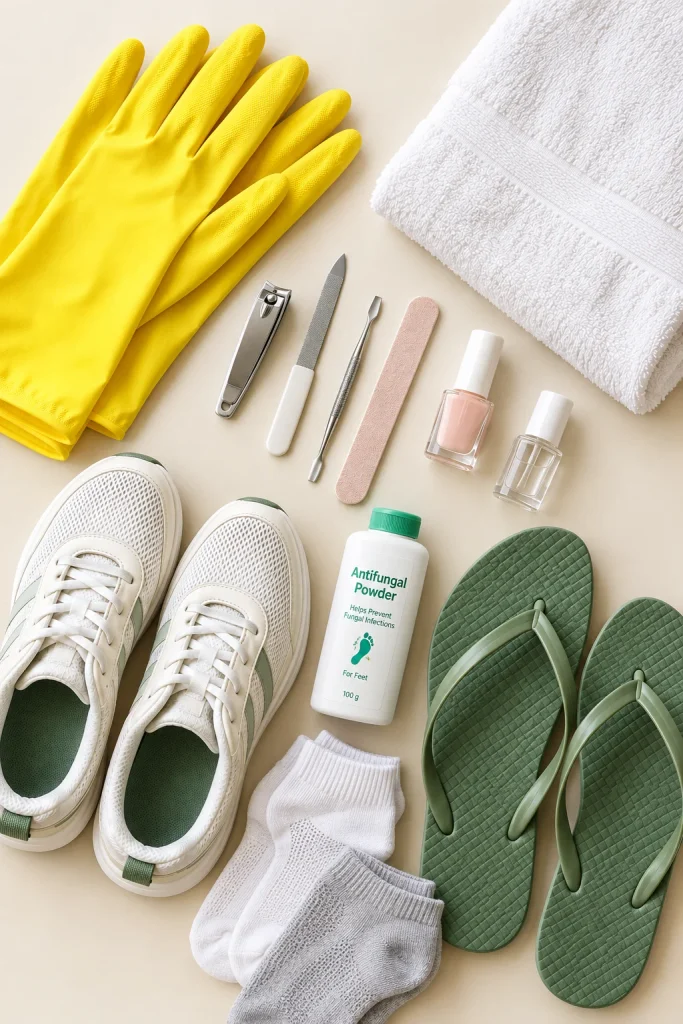
Clearing the infection is only half the job. Fungus hides in shoes, gloves, and wet places. Remove its hiding spots, and the risk drops.
Habits for Healthy Fingernails
- Wear waterproof gloves for dishes, cleaning, and gardening. Long contact with water raises the risk.
- Keep nails short, clean, and dry. Dry your hands fully after washing.
- Do not bite your nails or chew the skin around them.
- Do not cut or pick the skin around the nails. Small breaks let germs in.
- Limit artificial nails. They can trap moisture. Skip them while you have an infection.
- Use your own tools. Never share clippers, files, or polish.
Habits for Healthy Toenails
- Dry your feet fully after washing, including between the toes.
- Wear cotton or moisture-wicking socks. Change them when they feel damp.
- Choose shoes with room for your toes. Rotate pairs so each one dries for a day.
- Treat your shoes. Use antifungal spray or powder inside them. Replace old, worn pairs after treatment.
- Wear sandals in public wet areas such as gym showers and pool floors.
- Treat athlete’s foot right away. Itchy, peeling skin between the toes can spread to the nails.
Be Careful at the Salon
Cutting, filing, and wet soaking all create small openings for germs. Pick a salon that cleans or sterilizes its metal tools. You can also bring your own tools.
Mistakes to Avoid
A few habits can slow your healing.
- Stopping too early. A rough nail does not mean treatment failed.
- Ignoring shoes and gloves. Fresh treatment inside dirty shoes invites the fungus back.
- Picking at the nail. Picking can spread the fungus to other nails.
- Using the same tools on healthy nails. Keep one set for infected nails.
- Guessing the cause. Not every odd-looking nail is fungal. A test saves time.
- Covering the nail with artificial nails. They trap moisture and hide changes your doctor needs to see.
Conclusion
Learning how to get rid of nail fungus comes down to three steps. Confirm the cause. Choose a treatment that fits how bad the infection is.
Then give the nail time to grow out. Mild cases may respond to daily home care. Stronger cases usually need pills or prescription treatment.
After your nails look healthy, keep your hands and feet dry. Wear gloves for wet work and rotate your shoes. Small daily habits protect your nails for years.